







SIEF History and Its Historians: Networks, Voices, and Active Projects
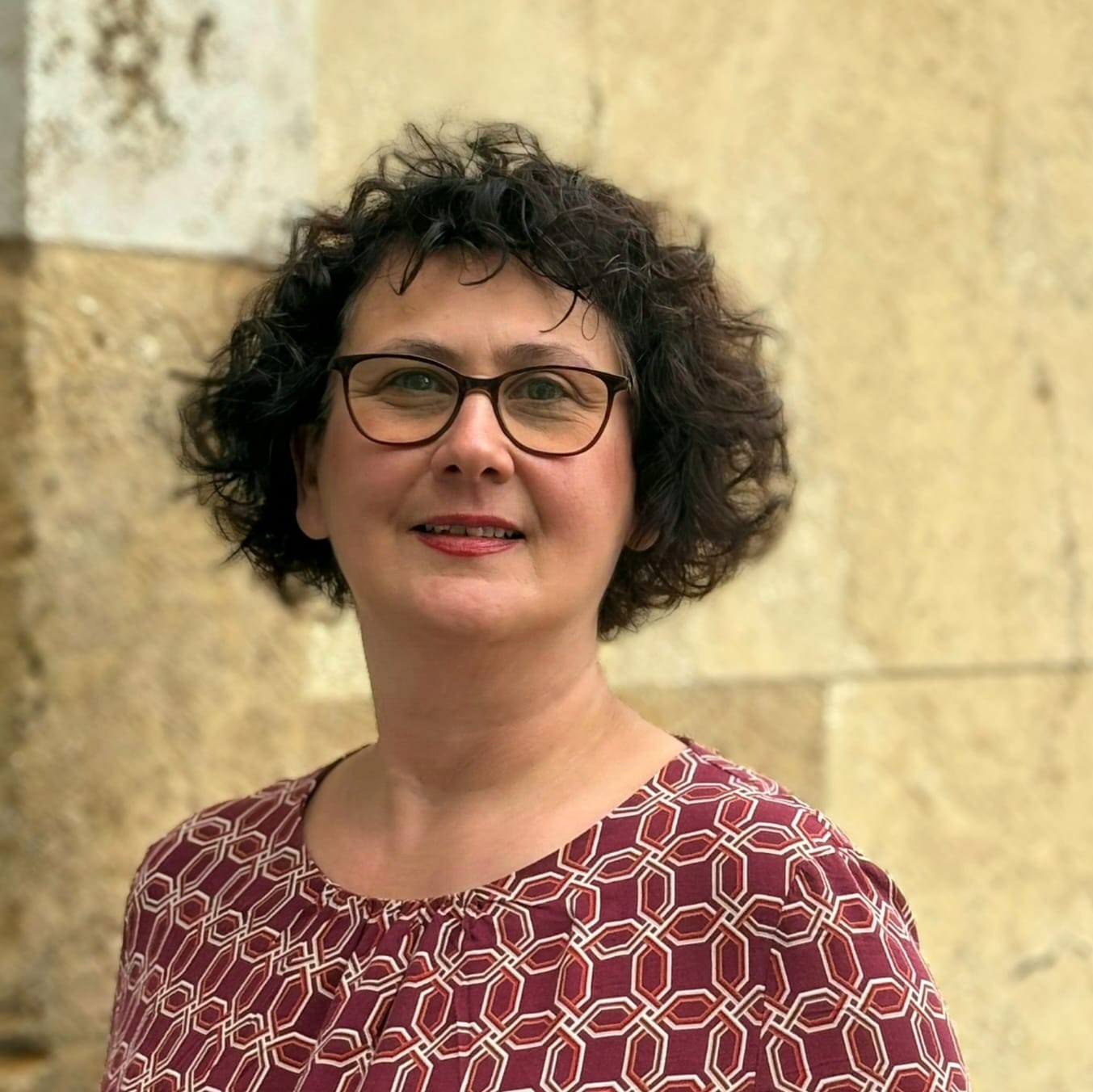
Hande Birkalan-Gedik, SIEF Historian
 My work as SIEF Historian grows from a long-standing fascination with the transnational networks that shape European ethnology and folklore. Conferences, personal connections, and scholarly exchanges have long been central to these fields, revealing a rich, complex, and often negotiated tapestry of both collaboration and contestation that has been fundamental to the formation and development of our society.
Building on this research, I had the privilege of contributing to the marking of the 70th anniversary of a key moment in the history of ethnology and folklore: the 1955 CIAP Congress held in Arnhem, the Netherlands. Congrès International d’Ethnologie Régionale gathering was a pivotal and programmatic event, organized by Winand Roukens and hosted by the Dutch Academy of Sciences, and it played a formative role in shaping international scholarly networks in the field. According to the congress program, the central point was to facilitate a deep self-reflection on the state and future of our disciplines of ethnology and folklore.
In recognition of my ongoing engagement with SIEF’s institutional and intellectual history, I was honored to be appointed SIEF Historian at the Board meeting in Amsterdam in 2026, following my invitation to speak at the SIEF Congress in Aberdeen on the anniversary of the landmark 1955 CIAP Conference, that continues to resonate as a cornerstone of international scholarly networks.
SIEF’s history is shaped not only by its institutions and conferences but also by the people who have guided the society: its presidents, board members, and other key actors. Exploring these networks provides insight into SIEF’s international reach and the intellectual journeys of its members, showing how SIEF has fostered collaboration across national, personal, and scholarly boundaries.
As SIEF Historian, my first focus is on uncovering the contributions of forgotten, marginalized, and sidelined female ethnologists and folklorists, both within SIEF and beyond. Highlighting these voices is vital for creating a more inclusive understanding of the association’s past and for opening new perspectives on its future.
Building on the foundational work of Bjarne Rogan, I also plan to examine the intertwined histories of national institutions, personal trajectories, and scholarly milieus, alongside the pivotal role of SIEF conferences in shaping the field. In addition, I will be developing collaborative research projects within SIEF to trace how members and their national traditions of ethnology and folklore have interacted with SIEF over time. As part of this work, I plan to conduct interviews with living SIEF presidents and board members to capture their experiences and reflections.
Alongside scholarly research and building on these materials, one immediate but ongoing project is to develop accessible, material ways of engaging with SIEF’s history—such as archival postcards, posters, stickers, and pins—while also expanding the existing SIEF historical depository with new research outputs. This work will be carried out in a collaborative fashion, with the aim of presenting at least some of these materials at the 2027 SIEF meeting in Bolzano.
These efforts, I hope, will illuminate both the people and the networks that have shaped SIEF, highlighting overlooked voices while connecting the society’s rich past to its dynamic present and future.
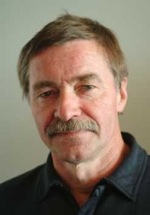
Bjarne Rogan, SIEF Historian
 During
a merry dinner at the SIEF congress in Derry in June 2008 I was – to my
surprise – appointed «the historian of SIEF». How did it all
start?
During
a merry dinner at the SIEF congress in Derry in June 2008 I was – to my
surprise – appointed «the historian of SIEF». How did it all
start?
After a meeting at le Musée des Arts et Traditions Populaires (ATP, now MuCEM) in Paris in June 2002, I was compelled to stay two additional days in Paris, due to one of the not infrequent strikes at the airport. In order not to waste the time, I looked into the museum archives and discovered a considerable amount of historical documents concerning SIEF and its forerunner CIAP. Having observed – as a Board member of SIEF since 1998 – a remarkable shortage of knowledge of our own history among all of us, myself included, my curiosity was aroused. This lack of knowledge is of course due to the fact that the presidency and the secretariat (until 2001) have always been ambulating and no central archives do exist.
The ATP archives contain CIAP/SIEF documents from the long «reign» of Georges Henri Rivière (Paris), who kept contacts with the organization from the mid 30s to the mid 60s. An important bulk of the ATP material stems from the presidency of Karel C. Peeters (Antwerp/Leuwen, 1964-1971). Later visits to Paris led me to the UNESCO archives, where much CIAP (Commission Internationale des Arts et Traditions Populaires) material from the interwar period is kept. In connexion with my travels in Europe in later years, I have found CIAP and SIEF material in university and museum archives from Vienna to Arnhem, from Dublin to Amsterdam, from Göttingen to Lisboa – all home sites for central actors in European ethnology during the lifetime of CIAP/SIEF (1928-present). Nordiska museet, Stockholm, contain much material, thanks to Sigurd Erixon. Although never president of the organization, Erixon was its probably most influential actor for more than 30 years.
My intention was to write a monograph on the history of CIAP/SIEF. So far, I have published – or have in print, or have planned – a series of articles focussing on certain subtopics, like CIAP and the governance policy of the League of Nations, the Nazi menace in the 1930s, etc. The main reason is that the history of this old organization is in many ways so inconsistent and full of ruptures and pauses that a coherent presentation seems difficult. CIAP/SIEF reflects on the one hand the heterogeneity of all the European ethnographical, folkloristic, etc. schools and trends, as well as the development over three to four generations of research(ers). Its history is full of short-lived enthusiastic efforts to create a common platform, broken by long periods of dormant existence; it is also marked by several reorganizations and strongly influenced by general political issues and by European great-power politics, as well as of infighting and personal strategies of some of its actors. Thirdly, the scientific activities have taken place not in SIEF as such, but in its commissions or working groups. And the archival remnants of these groups are even more spread than those of the mother organization.
My plan so far is to write a couple more articles, on either specific SIEF topics and/or on the activities of some its main protagonists. I intend to concentrate on the role of Sigurd Erixon and his SIEF net-working: G. H. Rivière, Jorge Dias (Portugal), B. Brataniç (Yugoslavia), P. J. Meertens (the Netherlands), Csermak-Rohan (France). For a general overview, I hope to be able to present a sort of «Annals of CIAP/SIEF», rather than breaking my neck on an effort to write an analytic monograph of this formerly non-coherent organization. The archives are full of sundry letters and miscellaneous notes, some important, some insignificant. It is certainly an insignificant fact that the organizer of the 1955 CIAP congress in Arnhem, Winand Roukens, advised the congressists to wear a «Sunday-best-suit/Sonntagsanzug/costume de dimanche» (cf. the dress code, or rather lack of such, in Derry 2008!). It is also totally insignificant that the first meeting of the reorganization committee in 1962 was so merry that the future general secretary Roger Pinon returned from Antwerp to Liège wearing the future president Peeters’ overcoat – and it was Pinon’s wife who discovered it! And it is perhaps also insignificant that in 1957 the SIEF archive was stolen (by a burglar?) from the general secretary Jorge Dias when he was listening to his wife Margot playing the piano in an adjacent room. But in the «Annals of CIAP/SIEF» such anecdotes may lace a periodically somewhat dull administrative history.
Bjarne Rogan, University of Oslo
bjarne.rogan(AT)ikos.uio.no
Publication where CIAP/SIEF is discussed
- 2012. An Internationalist Among Norwegian Folklorists. A Biographical Sketch of Reidar Th. Christiansen (1886-1971). Arv. Nordic Yearbook of Folklore 2012 ;Volume 68, p. 91-119
- 2012. The Institutionalization of Folklore. In: Regina Bendix, and Galit Hasan-Rokem (eds.), A Companion to Folklore. Wiley-Blackwell 2012, p. 598-630
Minor articles on CIAP/SIEF
- 2011. A Remarkable Congress and a Beloved General Secretary CIAP & SIEF, Arnhem 1955 and Jorge Dias. SIEF net 2011, 11 p., at: http://www.nomadit.co.uk/sief/sief2011/downloads/inaugural_add_sief2011.pdf
- 2012. An Everlasting Bone of Contention? Some Remarks on the Earlier Debates on the Name of a Scholarly Organization (CIAP/SIEF) and a Discipline. SIEF News 2012, volume 10.(1), p. 5-9, at: SIEF May 2012 Newsletter
Published main articles on CIAP/SIEF
- 2013. Popular Culture and International Cooperation in the 1930s CIAP and the League of Nations. (Springer Verlag, Heidelberg/Berlin (in the book series: "Heidelberg Studies on Asia and Europe in a Global Context")
- 2013. Sigurd Erixon on the Post-War International Scene European Ethnology and International Activities ca. 1945-1968 (in Arv).
